French Fries
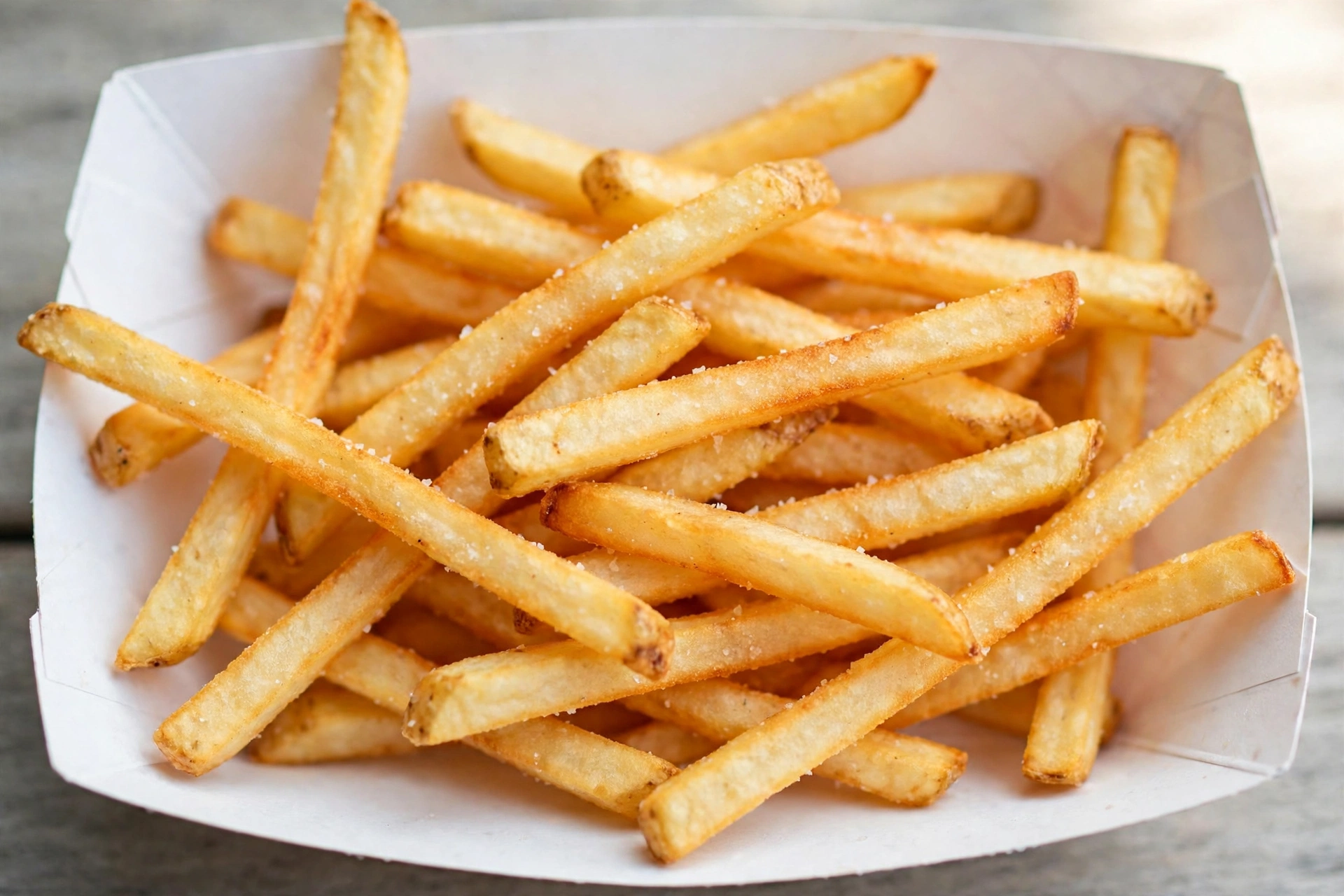
Whole potatoes, hand-diced in store and cooked in 100% sunflower oil. One size only. Order them light, well-done, or extra well-done at no extra cost.
In-N-Out fries are a love-them-or-argue-about-them institution. Whole potatoes arrive at the store, get hand-diced by an employee working a lever press you can watch behind the counter, and go straight into 100% sunflower oil — never frozen, never coated. The result is a fresher, more potato-forward fry than the industry standard. The one non-negotiable: eat them immediately, and if you like them crisp, order them well-done — it changes everything.
What's on it
Potatoes, sunflower oil, salt
Allergens: None of the major allergens in the fries themselves; cooked in their own fryer. Full details on the allergen page.
Typical price
$2.60
Calories
370
How to order
Say: "Fries well-done" for extra crisp, or "fries light" for soft.
Nutrition (approximate)
- Calories
- 370
- Total fat
- 18g
- Carbohydrates
- 52g
- Protein
- 5g
- Sodium
- 150mg
Full menu nutrition: nutrition & allergen page.
Good to know
- Prices vary by state — the French Fries can differ by up to 70¢ between the cheapest and priciest states. Check your state.
- Every burger can be ordered Animal Style or Protein Style at no extra structure change — see the secret menu.
- Onions are free, your way: raw, grilled, chopped, or a whole grilled onion.
Fresh vs Frozen: The Great Fry Argument
In-N-Out fries divide the fast-food world. The case against: they are softer, paler and less aggressively crunchy than the industry standard. The case for: they taste like potatoes, because they are — whole Kennebec-style potatoes, hand-diced in the store, cooked once in sunflower oil, salted and served. Most rival fries are frozen, coated for crunch, and par-cooked before they ever meet the fryer. Neither side is wrong; they are different products wearing the same name.
What settles the argument for most skeptics is the well-done order. Ask for fries well-done and the kitchen leaves them in the oil longer — they come out darker, crisper and much closer to the fry most people picture, while keeping the fresh-potato middle. It costs nothing and it is the single most effective free upgrade on the menu.
The Doneness Guide
Light: pale and soft, for people who like the potato flavour front and centre. Regular: golden, tender-crisp, the default. Well-done: darker, firm, properly crunchy — the regulars' default. Extra well-done: as dark as the kitchen will take them; approach with commitment. Salt is its own dial too — no salt and extra salt are both free requests, and a packet of spread on the side turns any fry order into a dipping situation.
Why They Go Soft (and Why Fans Do Not Care)
Fresh-cut fries have more moisture than frozen, coated ones, so they soften faster — the five-minute rule is real. Eat them in the car, eat them first, or accept the trade. Fans will tell you the softening is the receipt: proof nothing about the fry was engineered in a lab three states away.
Make It Yours
In-N-Out builds everything to order, so the French Fries is a starting point, not a fixed recipe. The variations regulars actually use:
| Variation | What changes | Cost / calories |
|---|---|---|
| Animal Style | Cheese, grilled onions and spread on top | +~$2.75 · +~310 Cal |
| Well-done / extra well-done | Longer in the oil, crisper | Free |
| Light | Softer, paler fries | Free |
| No salt / extra salt | Seasoned your way | Free |
French Fries Questions
Why do In-N-Out fries taste different?
Because they are fresh potatoes cooked in sunflower oil with no coating or freezing — closer to homemade fries than to the standard fast-food fry. It is also why they soften faster; eat them first.
Are In-N-Out fries gluten-free?
The fries are just potato, oil and salt, and they are the only item cooked in their fryer — which is why many gluten-free orders rely on them. The kitchen is not certified gluten-free, so confirm with the crew for celiac needs.
What does "well-done" mean for fries?
Longer in the oil for a crisper, darker fry. "Light" is the opposite — softer and paler. Both are free to request.